
TRIGGER WARNING: Mentions of violence
By Kate Quiambao
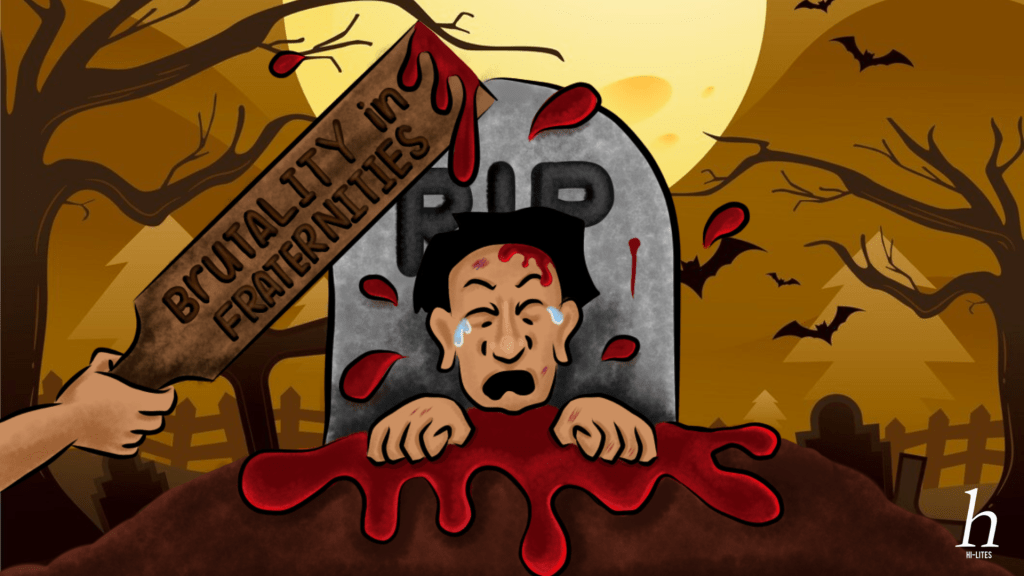
On Saturday, February 18, Adamson University student John Matthew Salilig was reported missing on the night of Tau Gamma Phi-Adamson Chapter’s welcoming rites, held in Biñan, Laguna. After days of searching, Salilig’s body was found in a shallow grave in an abandoned lot in Barangay Malagasang in Imus, Cavite, on February 28.
According to the statements of the identified suspects, the initiation rights commenced with a blow of paddles at around 1:30 p.m., which was then interrupted and temporarily held back since Salilig needed to defecate and throw up. The rights finished at 3:30 p.m., whereas the group left Biñan at 7 p.m. to supposedly bring Salilig to a member’s home in Paranaque. On the drive to Paranaque, Salilig allegedly suffered a seizure inside the vehicle, but the group tried yet failed to revive the student. This situation prompted the group to decide whether they should bring Salilig to the hospital or dispose of his body, which gained a collective answer to choose the latter option.
Once the decomposing remains were identified, Salilig’s body was promptly subjected to autopsy and forensic examination. The medico-legal report then showed that he had succumbed to severe blunt force trauma to his lower extremities, injuries that are possibly brought about by fraternity rituals. This case is yet again an addition to the list of 36 reported deaths caused by hazing. However, despite the unsettling number of cases in the Philippines, this inhumane act continues to inflict harm on society and be part of fraternity initiations.
Pursuit of Power
Hazing, as a common practice in fraternities, is a behavior theorized to inculcate solidarity among group institutions. In hopes of constituting such an accord, it is also deemed to contribute to ensuring loyalty and commitment of group members, but most importantly, enforce a social hierarchy within groups. While hazing promotes willful acts such as physical injury at the expense of the life of the individuals involved, it can be said that this vicious practice is about power and control, inclined to build animosity between people rather than foster unity within respective fraternities. Ironically, this often-deadly initiation ritual does not completely adhere to the concept of brotherhood, which is what fraternities are known to advocate for.
Pursuit of Pleasure
Initially, the whole initiation ritual was constituted to get new members to recognize their inferiority to their upperclassmen. Hence, harmful and potentially dangerous activities included in hazing are imposed for the upperclassmen’s enjoyment, all in the name of fun or tradition. This behavior, rendering the pursuit of pleasure misguided at best, not only puts the involved individuals’ health at risk but also perpetuates toxic masculinity. With this, hazing can also serve as a medium for men to prove their dominance and toughness over others, which is then aggravated by, once again, the pressure to conform to outdated notions of what it means to be masculine.
Pursuit of Prestige
As teenagers strive to obtain a sense of belonging in their respective communities, they become more susceptible to joining fraternities despite the risk of hazing. Along this comes the faltering urge to maintain a reputation, which in a way, is rooted in peer pressure. Strikingly, neophytes of fraternities are not only subjected to paddles but are also responsible for the errands of their so-called leaders. However, in all these challenges that they must endure to prove themselves worthy, ranging from harmless pranks to illegal activities, fraternities impose a stigma on being a quitter, which cultivates the desire to continue, making it paramount to its new members. By completing dehumanizing tasks assigned to them, neophytes are able to demonstrate their commitment to the group, which says a lot about how hazing is gradually becoming a status symbol within fraternities, whereas those who were able to put up with the most intense initiations are the ones deemed relevant, more so having greater prestige.
Quest for Justice
Time and again, the Philippines faces constant cases of death caused by hazing, which prompts the government to vow to step up efforts to put a halt to fraternity hazing in colleges. Every time we face another death, the ones in position are inclined to enact and adjust existing laws to prevent more killings, which clearly proves that putting an end to this pervasive social issue is easier said than done. While the Anti-Hazing Law was enacted in 1995 after the death of Lenny Volla, a student at the Ateneo law school, which was amended upon the well-known death of the University of Sto. Tomas student Horacio Castillo III, the quest for justice for the lives of hazing victims, as well as the lives of their loved ones, remain prolonged and arduous. Families who sought for justice are still in the brim of agony from their losses: children who went home, only to be carried by police officers as their lifeless bodies became limp and decomposed; and children who were lost, unable to return to their families as their corpse remains unfounded. And thus, torture and gang violence not only inflict harm to those who associate with the organization, but also indirectly shatter the heart of the families’ who once took care of the souls who have met the tragic incident perpetuated by fraternities.
While this issue has put many promising men and their dreams to waste, we question why our existing system, despite the existence of laws, continues to put such people in a barbaric state. This then entails a collective effort to call for justice, not only towards the government but also towards school administrations that allow such maltreatment to happen. However, beyond our appeal for justice, we are also called to create a culture that breaks down the barriers set forth by brotherhood, encouraging victims to stand against their perpetrators and break their code of silence. As fraternities anchor their strength on secrecy, we then work to establish a culture where victims are able to feel safe once they come forward and report their experiences.
 HiLites ASHS