
by Scott
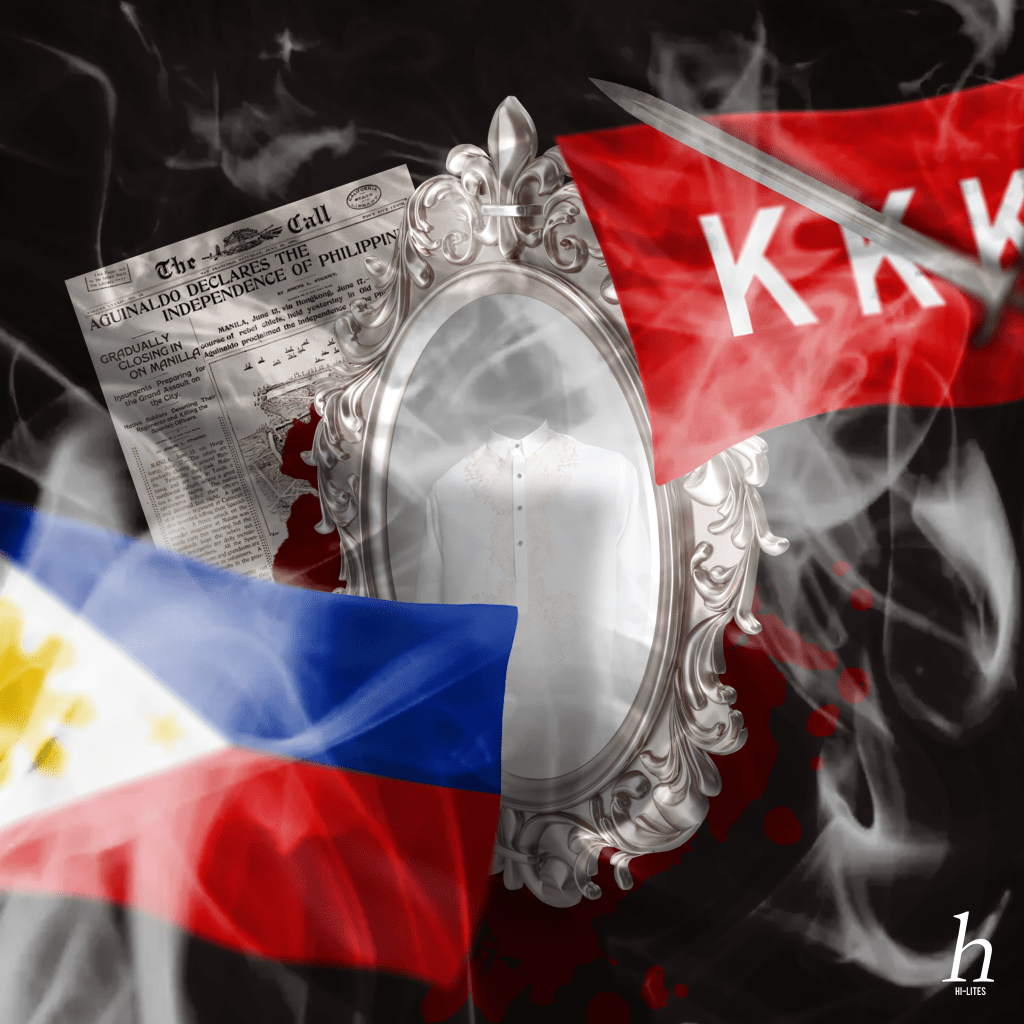
On June 12, 1898, an indelible moment firmly cemented its place in history when Emilio Aguinaldo declared the liberation of our country, marking a momentous occasion where we triumphantly broke free from the oppressive grasp of our Spanish colonizers. However, as the years unfold, transitioning from one administration to the next, we find ourselves inevitably immersed in profound introspection, compelled to engage in a critical examination of the significance behind the celebration of Independence Day. With this, it is only natural for us to raise a crucial question: Is it truly worthy of our jubilant celebrations?
The Roots of Our Struggle
All things start out as free — there is no such thing as “gaining” independence. The precedent set is that everything, and everyone, has freedom from the start, and when we “gained” our independence from the Americans back on June 12, 1898, a declaration that was not recognized by the Americans during that time, we were simply taking back what was stolen from us. The caged bird that soars through the skies once more did not “gain” its freedom, and neither did the shackled Filipino once their independence was proclaimed.
Yet, to have reached that point in history required a great deal of sacrifice; while Jose Rizal disapproved of a violent uprising and instead fought using the power of pen and paper, that did not stop Andres Bonifacio and the rest of the Kataastaasang, Kagalanggalangang Katipunan (KKK) from staging a Luzon-wide armed revolution against our Spanish colonizers. Gabriela Silang, Emilio Jacinto, and Antonio Luna were among the names of those who had laid their lives for the cause of the Filipino people. In our pursuit of a tomorrow that we can claim as our own, many have died fighting for our cause. A few lines from Don Blanding’s “Bataan Falls!” rings true:
“Like the tramp of feet on the road to doom,
Like the bomber’s roar. . . like the cannon’s boom.
Like the drums of death the word command
Men and women of every land.”
An estimated 220,000 Filipinos died in our conquest for freedom from the Spanish. Most of them were civilians that yearned for life and land that they can call their own — but were simply shot down, massacred and left as bodies to rot under the sun.
While the Spanish were gone from our lands, the Philippines unknowingly became a bargaining chip between colonizers, with Spain trading us to the United States in exchange for wealth as well as ending the Spanish-American war in the 1898 Treaty of Paris. In the same year, Emilio Aguinaldo declared our independence from foreign power, which was subsequently not recognized by the United States. Just as one war had ended, another began.
History would tell us the same story of colonialism unfolding four times in the Philippines — by the Spaniards, Americans, British, and Japanese. The country’s independence is squandered by foreign power, and is also not a stranger to being squandered by the country’s own leaders, coming from the likes of Joseph Ejercito Estrada and the late Ferdinand Marcos Sr., both of whom were ousted from their positions through the peaceful demonstrations of the EDSA People Power Revolutions I & II.
It’s quite ironic that we took back our freedom from our own country; we restored democracy back to the hands of the citizens and brought an end to our late dictator’s regime. When the common Juan gets deprived of economic and political liberties during the Martial Law era, they showed their discontentment out in the streets — and in those same streets they were persecuted, kidnapped, or tortured in dictatorial fashion. The echoes of the screams of those that were beaten, raped, and killed linger and live through the democracy that we have today.
Rain or shine, gunpowder or blade, diplomacy or violence, our freedom is one that was won through sacrifice — and we should not let it go to waste.
Freedom?
And so it was that the modern Filipino became free — however with some major caveats. While we are no longer colonies of Spain and America, their extended stay in the Philippines has white-washed much of Filipino culture in favor of our colonizer’s beliefs, culture, ideologies and values. This manifests negatively as colonial thinking:
“We should’ve been colonized longer.”
Many Filipinos of today are still enslaved to colonial mentality. The very thought of leaving the country is one that invites praise from parents: citing better job opportunities, benefits, as well as having an elevated standard of living. The stark preference of imported goods to local products is a common theme in Filipino households, and so is the fair-skinned beauty standard. It is not too uncommon to see tactless remarks in social media citing that the Philippines “should’ve been colonized longer” or “colonized by a different country.”
Such remarks degrade the sacrifices made by our ancestors who have shed their blood and tears to liberate the country from foreign power. Suffice it to say that the Philippines of today would not have existed if not for those that yearn and dreamed of a free nation. Their suffering is not in vain — we must not make it in vain.
Still the fight for freedom is not over — while it is enjoyed by the Philippines in the form of sovereignty, that is simply just one of many manifestations of freedom. Our ancestors did not only wish for a country free from colonizers, but they wished for a world where everyone can enjoy the luxuries of freedom — freedom of expression, freedom of speech, and other academic liberties to name a few.
The Fight Is Not Over
Though we have made significant strides in exercising our freedom as a sovereign state, it is equally undeniable that we still have so much to fight for. While the Philippines has successfully gained independence from colonial powers, an unbroken chain of oppression continues to exist, albeit in different forms. These forms of oppression represent a lapse in our freedom — because while some of us are indeed free, this freedom is not shared equally by all sectors of society.
Latest data from Philippine Statistics Authority (PSA) shows that poverty incidence in 2021 was recorded at 18.1 percent, which translates to 20 million Filipinos who struggle to meet individual basic food and non-food necessities. Notably, among the basic sectors, fisherfolk and farmers continue to endure the highest poverty incidences, retaining their status as sectors with the greatest poverty incidences since 2015 and 2018.
This stark reality serves as a poignant reminder that marginalized communities persistently encounter injustices from various angles. Consequently, celebrating Independence Day without actively addressing these ongoing acts of oppression not only perpetuates their marginalization, but also preserves a form of blind patriotism that fails to recognize and alleviate their plight.
Moreover, the complex political landscape, plagued by misuse of authority, also plays a role in diminishing the essence of Independence Day. The rampant presence of corruption, the persistent reign of political dynasties, and the continuous misalignment of priorities repeatedly expose the hypocrisy within the government. While they willingly partake in celebrating the nation’s autonomy, they simultaneously turn a blind eye to the urgent need for transparent governance and accountable leadership.
The wishes of Rizal, Bonifacio, and all those that yearned for independence demand freedom from foreign, neocolonial ways of oppression; the Philippines is still politically on its knees to China when it comes to tensions over the West Philippine Sea, and we rely economically on the exports of other countries because we can’t manufacture our own. These are but the trials and tribulations that beset a free nation, and are problems that we ought to solve.
The question of independence goes beyond sovereignty and goes into how that freedom exists within Philippine society today. It goes beyond state and world politics, and weaves into a community of safe spaces, where all voices are heard and all the needs of the Filipino people are met. A nation where everyone is free, and not economically shackled to poverty or politically caged to having no rights.
Our independence is a showcase of grit and sacrifice of our country’s line of noble fighters – the Rajas, the Datus, and the Katipuneros, our soldiers, and diplomats.
Independence day is observed both as a tribute to the Filipinos that have laid down their lives, and as a solemn reminder to not let their deaths be in vain. No longer shall our freedom be walked upon by colonizers, and our political and economical rights be systemically oppressed. Let us uphold the freedom that they have long fought for, by protecting our sovereignty, and by ensuring that oppression has no place in a free nation.
 HiLites ASHS