
Article by Kate Quiambao
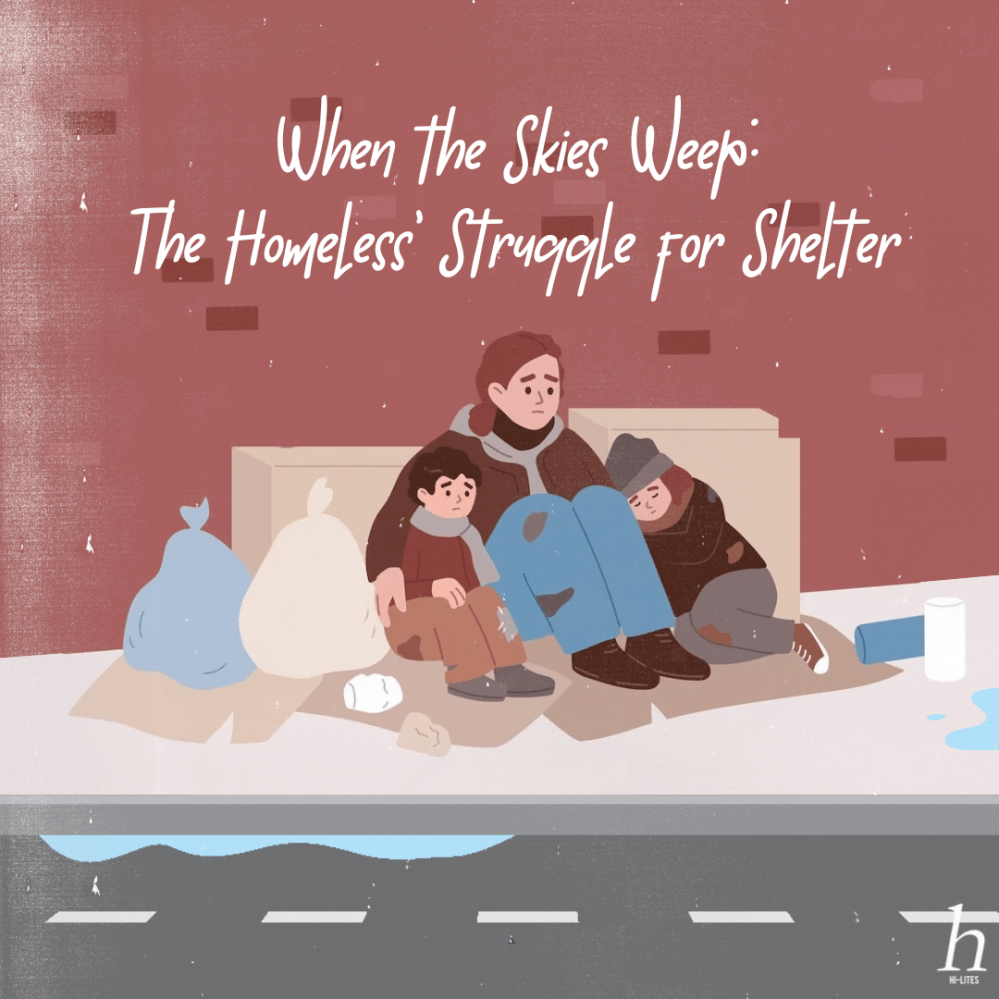
Following PAGASA’s recent announcement at the beginning of the rainy season on June 2, many individuals warmly embraced the notion of “cuddle weather” and the increased likelihood of class or work suspensions. Its onset was marked by the passage of Super Typhoon “Betty” and the prevailing southwest monsoon. As Filipinos are advised to keep umbrellas within reach, it is equally important to maintain awareness of a vulnerable segment of our society, particularly during the rainy season: the homeless.
While some may perceive this time as an opportunity for cozy moments, we must not disregard the challenges endured by those lacking shelter. This then begs the question: “How do we reconcile the idea of finding coziness in this weather while thousands of homeless individuals are grappling with immense challenges?”
Weathering the Storm
Even with the Philippines experiencing robust economic growth at a rate of 7.6% in 2022, the highest recorded since 1976, the nation still confronts a profound homelessness crisis. However, unraveling the multifaceted nature of the said issue entails an exploration of an intricate web of causes. Beyond the stark reality of individuals lacking stable housing, a myriad of factors intertwine to shape their circumstances.
A study conducted in 2019 sheds light on the staggering numbers of homelessness in the Philippines, estimating approximately 4.5 million individuals without homes, with 3 million concentrated in the capital city of Manila. This concerning situation is compounded by the country’s 4.5% unemployment rate and an 18.1% poverty rate, which play significant roles in the proliferation of the issue. These economic challenges highlight the difficulty faced by individuals in securing stable lifestyles, including adequate housing. As a result, many find themselves on the brink of homelessness.
In addition to the aforementioned challenges, the Philippines faces a significant issue of domestic violence against women, which creates unsafe living conditions within homes. However, the lack of economic independence poses a major hurdle for women who desire to leave abusive relationships. Since many of them depend on their abusive partners as their primary source of income and security, they often face financial instability upon leaving. Consequently, affording housing and meeting basic needs for themselves and their children becomes a formidable struggle.
Natural disasters, recognized as obstacles to Philippine economic growth and development, are among some well-known factors that contribute to the rise of homelessness. Due to the country’s susceptibility to the impacts of climate change, coupled with the inhabitance of impoverished families within rural areas situated on mountainsides, river banks, and floodplains — the risk of natural disasters is significantly amplified. As a result, the destruction of infrastructure becomes a prevailing consequence, exacerbating the already pressing issue of homelessness.
Where can the homeless go?
As rainfall becomes more frequent, a critical question emerges: Where can homeless individuals find refuge during these challenging times? In an article documenting the experiences of homeless people, Maricel Abawag, who “lost everything” after her partner was incarcerated for assaulting her, shared her method of staying dry when it rains. Abawag covers the top of the pushcart she constructed for herself and her son with a transparent plastic sheet, providing them some protection from the rain. This poignant example highlights the limited access homeless individuals have to support and services, while underscoring the persistent scarcity of available shelter spaces in the country.
Despite President Bongbong Marcos setting an ambitious goal to construct a million houses annually and eliminate the housing backlog in the country by the end of his term, officials from the Department of Human Settlements and Urban Development (DHSUD) have expressed concerns about a significant lack of funds. During a Senate finance subcommittee meeting, Housing Secretary Jose Acuzar explained that the DHSUD had requested a budget allocation of PHP 95 billion for the upcoming year to fulfill President Marcos’ vision. However, the Department of Budget and Management (DBM) approved a mere PHP 3.95 billion, amounting to just four percent of the requested funds and less than half of the agency’s current budget of PHP 7.61 billion.
The substantial deficit in funding significantly impedes the government’s capacity to effectively execute the housing program. The limited financial resources pose significant challenges in addressing the considerable housing backlog and ensuring sufficient housing for those in need. Hence, the issue of homelessness remains persistent, particularly in terms of shelter provision, due to the ongoing shortfall in funding. In such difficult circumstances, homeless individuals often rely on the support and assistance provided by their respective Local Government Units (LGUs) and Non-Governmental Organizations (NGOs).
Beyond Perceptions
Addressing the root causes of homelessness is essential in tackling the issue, as it is nearly impossible to find a sustainable solution without doing so. However, it is equally vital to engage in dialogue about the representation and perception of homeless individuals within society. This is particularly important as stigmas and assumptions towards them significantly impact their way of life.
Evidently, the way people perceive the rainy season as a time for cozy moments can mirror wider societal stereotypes and beliefs about homeless individuals. Unfortunately, homelessness is often accompanied by negative assumptions and stigmas, including notions of laziness, drug addiction, criminal behavior, and potential danger. These perceptions are deeply rooted in society, influenced by misunderstandings, misinformation, and limited awareness of the intricate factors that contribute to homelessness. Such negative perceptions can have detrimental effects on homeless individuals, compounding the difficulties they face in breaking free from the cycle of homelessness and rebuilding their lives. These perceptions can reinforce the belief that their situation is hopeless, leading them to accept their circumstances rather than seeking avenues for improvement.
With these considerations in mind, it is of utmost importance that we raise our voices not solely for personal conveniences like rain suspensions, but to demand continuous support, dedicated resource allocation, and effective strategies that deliver sustainable solutions to enhance the living conditions of the homeless in the Philippines. Now, more than ever, we must advocate for comprehensive measures that address the pervasive problem of homelessness, promote social inclusion, and prioritize the dignity of every individual.
 HiLites ASHS