
By Olivia Infante and Joaquin Yulo
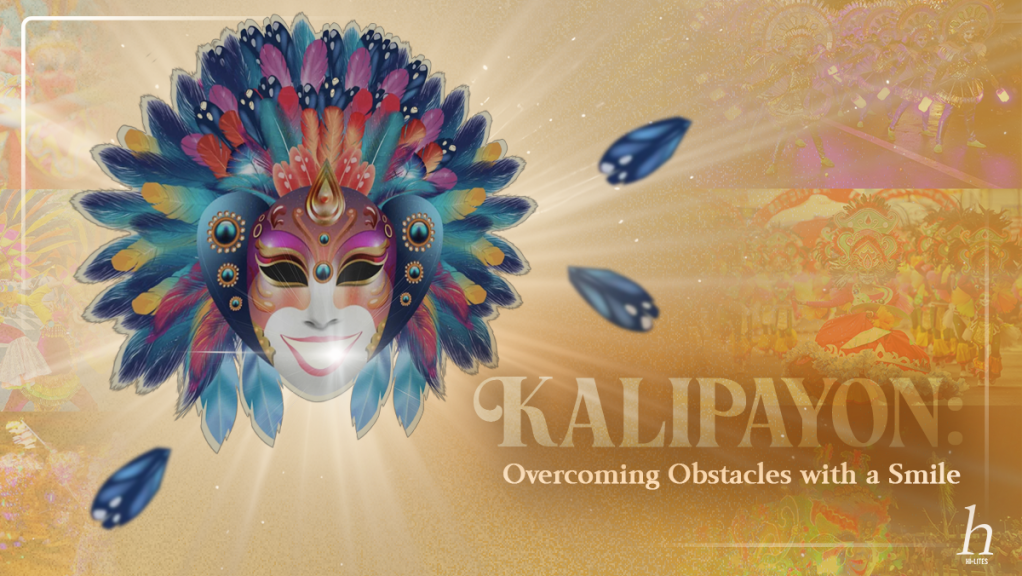
Thumbnail by Pia Punzalan
Every single street light in the night-fallen city luminously buzzes with jolts of electricity as neon glow sticks light up the sidewalks. In the four-lane Lacson Street highway, hundreds upon hundreds of street dancers create optical illusions through their mix of quick, five-star dance moves and lambent attires. The crowds cheer as the epic rhythms and loud beating of the drums pierce through the city, with every bass beat felt in each person’s heart. The unique smell of hot, homemade chicken inasal wafts in the air, prompting long lines that extend from the start of Lacson Street’s esquinitas until as far as the eye can see. Hung over the city lights is a large, white banner with bold text exclaiming: “Happy Masskara Festival, Bacolod!”
But where and how did it all begin? Though the festival is vibrantly celebrated every October with bright colors and even brighter vibes, the birth of the Masskara festival occurred during one of the darkest periods in Philippine history—the time of Martial Law.
The Mahogany Roots of Masskara Festival
Picture this—it was the 80s, when the nation’s music scene was bright and lively, and the fashion scene even more so—well, at least not in Bacolod. As a province situated in the western part of Visayas, the city was not as urbanized as Metro Manila, hence, the economy had an extreme reliance on sugar and the farmers who plant it. Coincidentally, it was in this time when Martial Law was declared. Alternatives to sugar were put into market circulation, dealing a heavy economic blow to the city. On top of all that, the Don Juan Ferry sank on its way to Bacolod City from Manila, causing over 700 Negrenses to be deprived of the chance to ever come home.
There was a panging feeling of grief echoing from the goodbyes the families that never got to make it home. With both the decline of the city’s economy and the people’s heartache, a dreary hue emerged. Darkness loomed all over the city.
It was after that, on October 19, 1980, when the masks were donned and Masskara was celebrated. The Negrenses’ will to defy adversity persevered as smiles were plastered on every mask.
In comparison to the grand, month-long festivities happening in the present day, the simple, intimate first celebration of Masskara was stale. The Masskara celebrations began with annual mask-making and small parades. However, with every passing festival, more and more passion was put into the history of Bacolod, which thus manifested into the ever-growing and ever-expanding Masskara festivals.
Each economic, social, and political crisis the city faced acted as a driving force for Masskara to grow even more. Essentially, it was the reimagining of Bacolod as a City of Smiles. Every October since then has boasted the town’s colors, bringing in tourists from all over the country—from fiery reds, to yellows that brighten like the sun, to royal purples.
Feeling Blue
One color, however, paints students blue as midterm marks release the week Masskara comes to its finishing highlights. However brilliant the streams and ribbons put up, students walk the hallways unsaturated and unexcited. Cardinal red marks seep through test papers while greenish-blue mocks some as they are given a notice for parents. Colors that can be deemed as an asset to Bacolod’s renowned festival became blinding towards the grays amongst students.
In the Ateneo, a small population of Bacolodnons bring the city’s pride with them as they pursue their studies miles away from their hometown. Albeit, they have their own set of frowns and downsides too. “While studying in ASHS, I wasn’t exempted from the shock of learning in a new school and a different city. Not only was I homesick, I also struggled to communicate and relate with my classmates because I hadn’t found my place in the classroom. Everything was intimidating and overwhelming…” said Pia Lo from 11-Bellarmino as she recounts her first few weeks here.
Mikhos Velez, a student from 11-Moscoso, adds: “A big change I took difficulty in adjusting to was having a language barrier between me and my peers. The dialect I once spoke everyday became a stranger to my tongue.”
With the dominance of doubt, insecurity, and discomfort, a colorless polyester masks an individual, tying them with a high-strung thread. This phenomenon, wherein one struggles to cope with the gap between one’s actual self and their ideal self, is one that repeats itself.
Painting Over The Monochrome
What often gets overlooked is that pargeting a smile that is not of yours can be more than just a facade—rather, a reminder of the person you want to be and eventually become. At the bottomline of things, the ideal that everyone wants to feel—is to be happy.
Much like Masskara, something beautiful can be created in the circumstances of suffering. As students, it is inevitable to need to face what is unfortunate and uncertain in life. “ASHS is so different from Bacolod because now, I’m meeting many students or people in general from other cities… while finding comfort in knowing they’re still Filipinos, too,” Lo explains. We are able to forge connections through relating our struggles with those around us creating affinity.
Martina Cortez from 12-Sullivan points out: “As students, we inevitably face struggles, but we can’t allow these things to hold any power over us. Masskara, for me, means that happiness is a choice.” There will always be days that fall short in the color spectrum—some days brighter than most, some darker. It is within those latter days that it is okay to rest our cheekbones, and find ways inch by inch. May it be a study buddy or a listening ear, an enlightening book or a pastime show, a well-deserved nap or a therapeutic shopping spree—there are an array of ways in one’s own personal palette to give color to their day.
A Silver Lining
May the fruitful festival call for us to put down our masks, frame them as a testament for how far we are to reach, and bring out the biggest grin possible. If there’s one thing that has stood firm and constant throughout the years, it’s the ideal of choosing to smile and look at the silver lining during the stormy seasons of life, just like the 80’s Bacolodnons did.
 HiLites ASHS