By Alex Lauricio
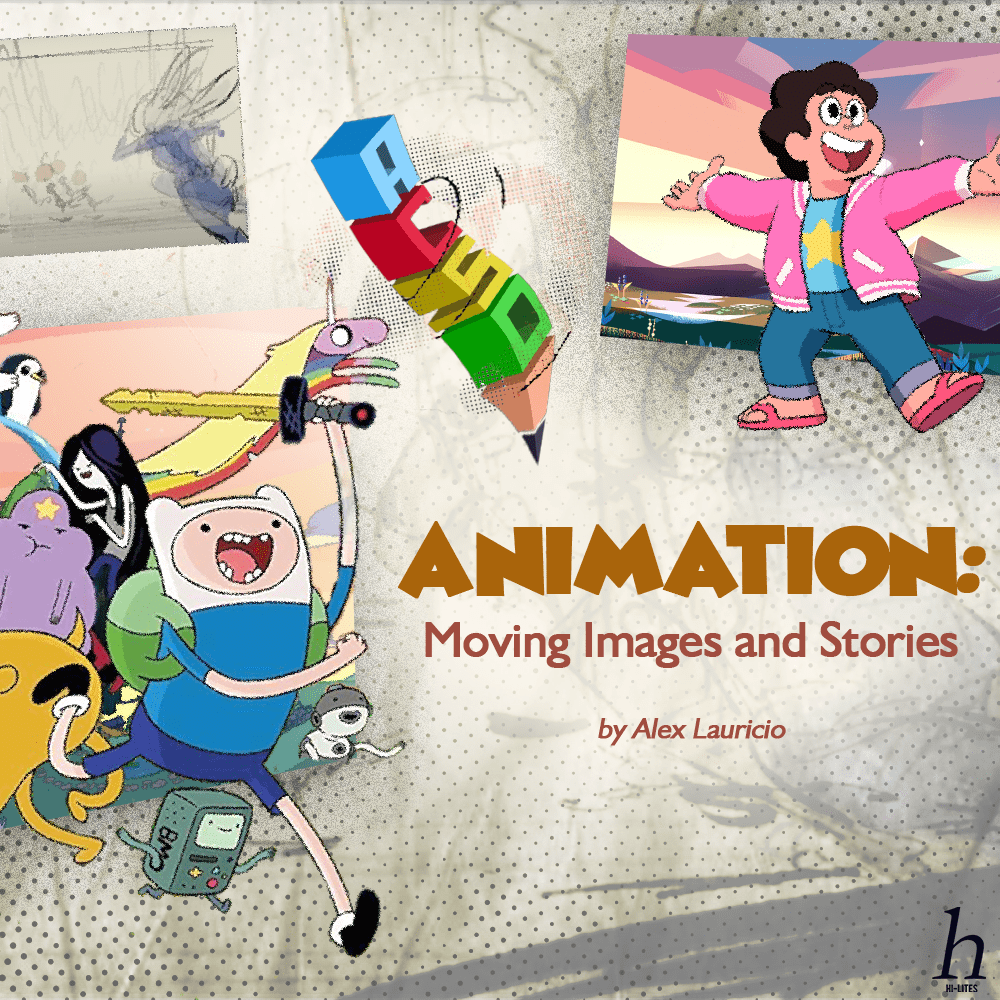
Animation has carved a place in our childhoods and provides a strong medium of storytelling and expression, combining motion with splendid, colorful imagery. From household cartoon channels, to the local animation industry here in the Philippines, the history of animation and its future is one that is rich, lush, and likely needs more frames—perhaps added by the generations of talented animators that have fostered it—to make it look smoother.
A Taste of Childhood
“My love for animation, either consuming the media or animating in and of itself, stems from all the cartoons,” said Mario Salaver, the Ateneo Animation and Creatives Studio (ACSO) secretary.
Before the advent of streaming services like Netflix, many afternoons were spent in front of the television, grinning at the calculated schedules we have just to catch to see the latest episodes of cartoons. It was tough trying to watch something you liked—you were constantly flipping through animation channels, stuck in between episode breaks, or confused at a part of the story because you missed the last episode.
From cartoons from animation giants like Cartoon Network, Disney, Nickelodeon—each channel sending goosebumps of nostalgia—down to adult cartoons like The Simpsons, animation has proved that it is not only a strong platform for voicing out experiences and stories, but it is also a medium for story-telling that is deserving of recognition and respect, regardless of age.
Cartoons have also made it into modern iconography and pop culture—from the online memes of Spongebob, down to the recent cartoon hits like Adventure Time, Steven Universe, and Gravity Falls—we encounter them either as stories that have touched and made a mark on us, or as reminders of a simpler time in our childhood.
Some old cartoons also received a modern makeover, constantly reviving them and creating new stories in diverse new lenses that weren’t made during their old runs. The 2016 iteration of the Powerpuff Girls, as well as the 2013 spin-off of Teen Titans (Go), immediately come to mind. Of course, this does not include the countless Filipino-dubbed anime that have formed the backbone of our childhoods.
Watch the Lines Dance
“Animation is art in motion,” said Salaver.
While animation had its roots in pen-and-paper drawings and physical flipbooks of the earlier half of the 19th century, other forms of moving pictures and images have been created long before the modern conception of the art form—the first pen-and-paper animation was released in 1908, Fantasmagorie, but other animation methods were developed before that.
These include the Magic Lantern, which played around with light and darkness to make the illustrations in glass slides appear to move, the Phenakistoscope that uses spinning motion to create moving images, and the kineograph, colloquially known as a flipbook. Films were created using these methods, but pen-and-paper were considered “true” animation techniques during this time.
In the Philippines, animation has its roots in the form of the komiks of the late 1920s. The creation of cartoons preceded the full-length feature animation films that took place in the 1980s. Panday and Adarna: The Mythical Bird were among the first animated films released for Filipinos by Filipinos, with the latter earning a spot in the Asian Collection of Japan’s 7th Hiroshima Animation Festival.
On the industry aspect of things, most of the animation services in the United States, Japan, and other developed countries are commonly outsourced to the Philippines. It may come as a surprise that the local animation industry scene is booming—as most of the services are offered to the international clientele.
The Legend of Tarzan, Kim Possible, and Hercules (1998) are among the animation classics that Filipinos helped in producing.
Recently, interest in Filipino animation has seen a resurgence due to Iti Mapupukaw’s (The Missing) podium finish in the Cinemalaya Philippine Independent Film Festival 2023. The Ilokano-Filipino movie will be the country’s 2024 Oscar entry for Best International Feature Film.
In the Ateneo Senior High School (ASHS), we have our very own premier organization that handles and produces animation—ACSO. They carve a place for animation—as well as the “creatives” part of the organization—in the ASHS, giving students the opportunity to work on animation, voice acting, and video editing work.
“What sets us apart from any of the other orgs is our art actually moves! No other organization does that!” said Lyle Fernandez, the organization head of ACSO.
ACSO: Animating the Future
While ACSO is a relatively new organization in the ASHS—
“If you’re an animator, or just an animation fan, then we’re here to offer you a platform to talk about and showcase your skills and interests in the field of animation! We’re not just animation though, we’re also into writing and voice acting, so we have the Creatives and the Studio down,” said Bryan Umayam, the creatives director for ACSO.
ACSO also offers experiences in writing, such as creating scripts and storyboards, as well as voice acting which also forms a crucial part of most animated videos. They emulate the working environment of an animation studio, designed to equip its members with invaluable knowledge and experience in both creative and animation work.
“We have a couple projects in line but the one I’m really looking forward to will be a animation video collab with another MCAD org. Keep up with us to find out who that org will be,” said Lyle.
Carving out its animation niche within the ASHS, the organization hopes to partner with other organizations in order to showcase what they’re capable of. While they have their own list of projects that they will execute within the year, collaborations with other organizations are always helpful in giving people more awareness of ACSO.
“We’re geared up to show the ASHS what ACSO is really made of, because animation deserves a platform, and that can only be realized with a group of passionate, talented individuals that care about our org as much as we do,” Umayam added.
From childhood memories to pop culture references, cartoons have been making a splash in the creative world—being a strong vehicle for storytelling that touches the lives of many of its watchers. Whether you’ve watched anime or cartoons as a kid, you can vouch for the power that animation can bring to the table. As ACSO continues to harness animation as a medium in the ASHS, they will continue to show us why animation is important in our lives; telling us through moving stories and crisp voice acting as they animate the future of animation here in the ASHS.
 HiLites ASHS