
By Artem
The sky’s the limit when it comes to progress. For the Philippines, numerous trips and business deals may mean boosting its development. However, with the prices we pay and invest into making these deals happen, how much is actually invested back to us?
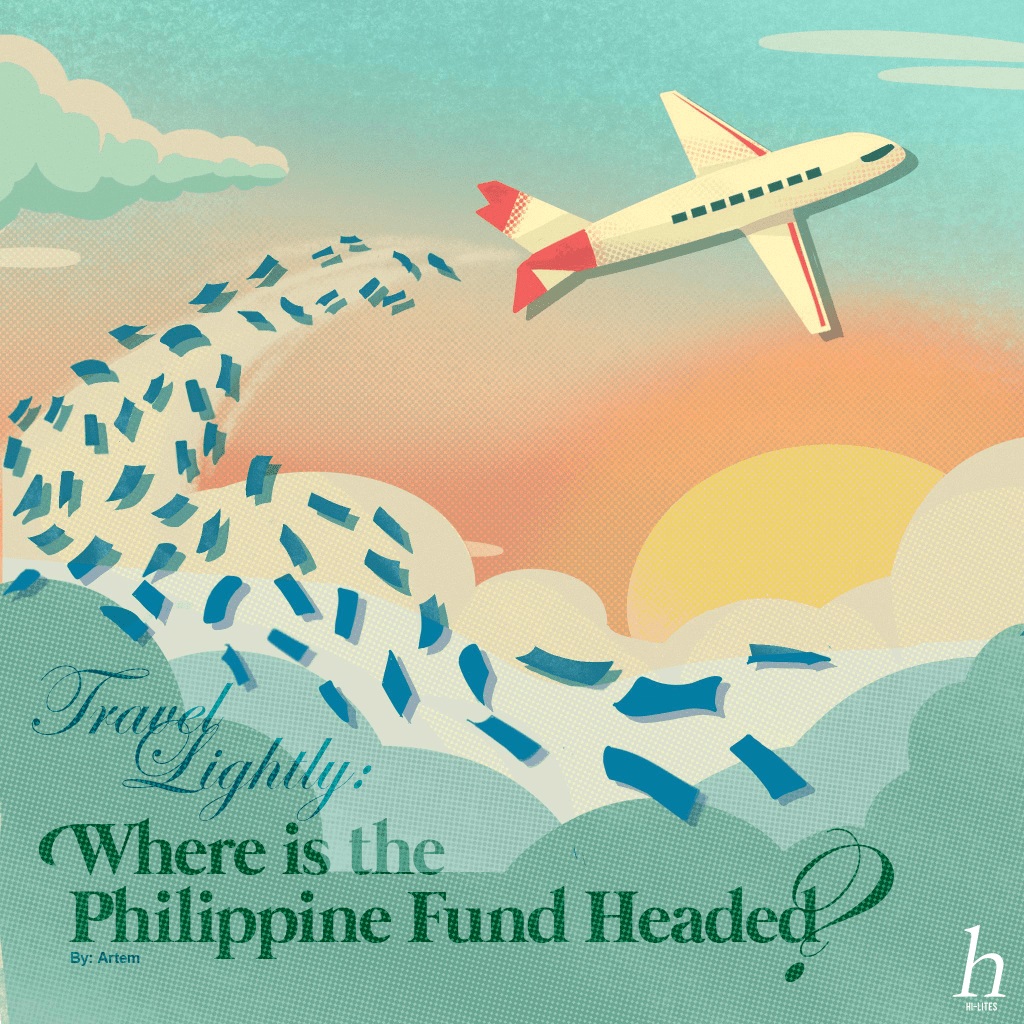
This year, President Ferdinand ‘Bongbong’ Marcos Jr. asked for a PHP 1.408B increase in travel funds, which is a 58% increase from the initial PHP 893.57M. With this, a lot of questions may arise as it seems that these funds aren’t executed solely for official purposes—but for personal ones as well.
Planned Route
The foundation for these funds is that they will be used to ensure different investments and pledges for certain projects for the country. By traveling internationally and locally, the President can build connections and gain support, especially since we do not have the capacity to execute huge plans fully on our own. The Presidential Communications Secretary, Cheloy Garafil, explains that these trips open doors to great opportunities. “At the same time, the administration also hopes to elevate the country’s position in the international community through stronger bilateral ties and improved relations with multilateral or international organizations,” she said in an interview.
Moreover, Department of Budgeting and Management (DBM) Secretary Amenah Pangandaman defends the additional budget as it would be worth the investments the President is to bring home. She also goes as far as to say that, “So, I think the travel expenses, as long as it will be beneficial and there is more advantage for our country, I think it’s okay. It’s justified.”
Considering the effect of the pandemic on our economic standing, these trips help the country get back on the right track. However, simply holding on to the justification that they are beneficial and advantageous is not enough. Large sums of money that only begin to open up opportunities aren’t the main objective; they must have a good lasting impact on the country.
How far can these funds go without the country losing more than it is are betting on?
Delayed Flights, Impacts, and Answers
According to Trade Secretary Alfredo Pascual, there is a total of PHP 4.8B “materialized” foreign investments that came from pledges. The PHP 4.8B funds only six projects that have started. These projects, though, still remain confidential.
Even if we are getting benefits from the trips, we still aren’t sure what they are. It’s already been a little over a year since the President was elected and started traveling, but we are still left in the air regarding these plans and projects. This, along with how there is a thread of personal motives, open up different questions regarding how the travel fund is being used.
One of the more known trips made by the President was that in Singapore, where he was seen alongside his family enjoying the F1 Grand Prix on October 2, 2022. Marcos justifies this trip by saying it was productive, having met the Singapore Prime Minister Lee Hsien Loong. Executive Secretary Lucas Bersamin clarifies that this trip was “partly official and partly personal” with some expenses backed up by the government. Regardless of that, Bersamin also says that it is impossible to determine what expenses were charged to the government or the Marcos Family. For reference, the general tickets for the Grand Prix can cost about PHP 52,840 (three-day pass), but for hospitality packages it can reach about PHP 406,000 (may be higher or lower depending on the package and length of stay).
Matters like these lead to complications and confusion. How sure are we that the money of every Filipino is used correctly? There shouldn’t be a gray line for what is a need and a want, especially for a third-world, developing country such as ours.
Choose the Essentials
Contrary to the proposed 58% increase for the travel fund, many aspects are facing budget cuts and aren’t receiving the same increase as this. DBM only gave a small 6% increase to the budget of the agricultural sector and 5% increase to education, among others. Considering that these sectors are not the only ones experiencing numerous issues, focusing on the country’s development should be the top-most priority.
Though these pledges and business deals are also significant, over budgeting and ignoring other pressing issues lead to misuse. With what little money we have, it is best to balance out what is in need of more attention. While most Filipinos are struggling to keep up with the price hikes of commodities, asking for a 58% increase in the travel fund seems to misalign with what is needed right now. This, along with problems such as the learning gap and faulty transportation systems, highlights the need for proper budgeting and prioritization of the government.
By focusing first on obstacles we face here, we can actually boost pledges and deals in other countries. Promoting the Philippines as an “investment hub” means to also invest back into the country. There is a good, impactful domino effect if we stir our direction towards what’s best.
Weighing what is more urgent and critical can help ease the load of the country. After all, if the government carries the fate of their people—then they might as well travel lightly.
 HiLites ASHS