
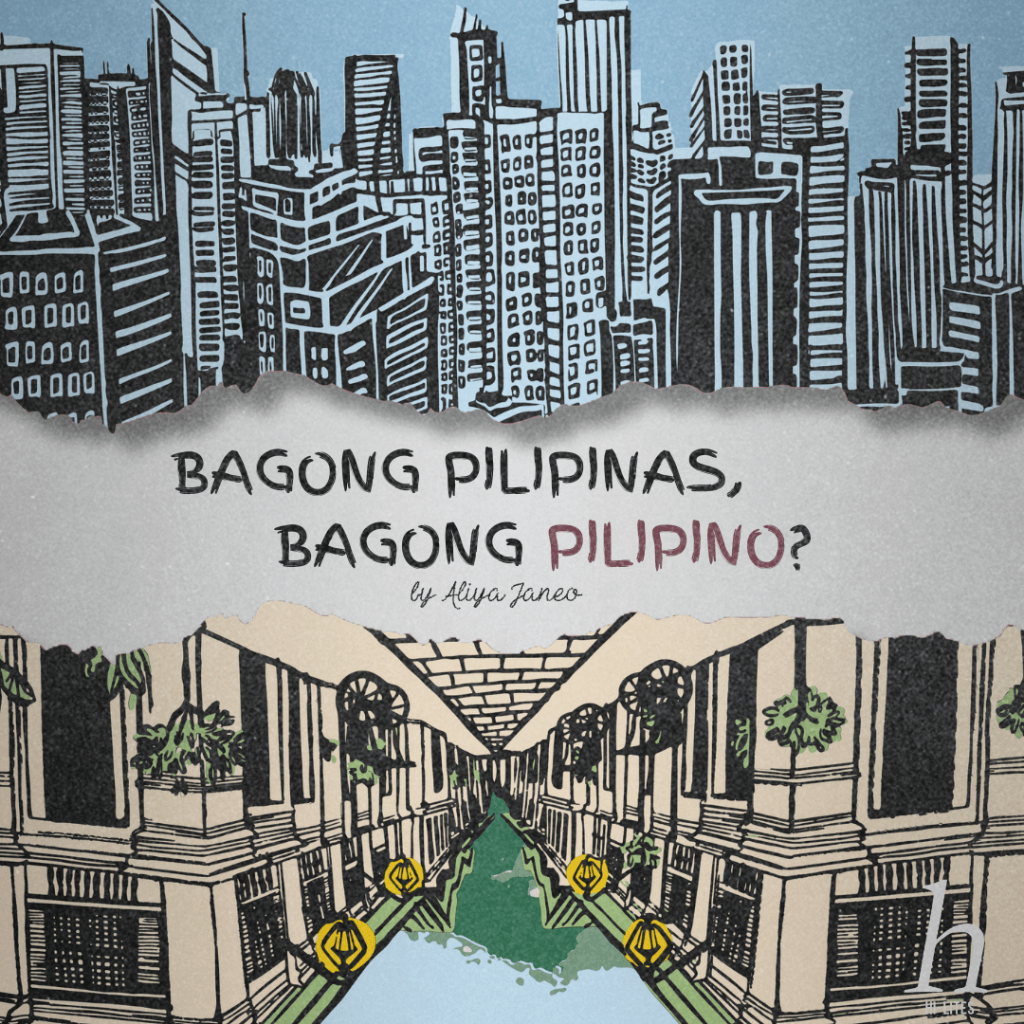
by Aliya Janeo
Change is inevitable, but do we have to change our country’s traditions and mindset?
For decades, we Filipinos have been singing the Lupang Hinirang and pledging the Panatang Makabayan— and after so long that might just change within two years; or even within one.
In With The New. Out With The Old?
In 1898, General Emilio Aguinaldo asked musician Julian Felipe to compose a song in celebration of the Proclamation of Independence. Before modern translations, Felipe’s composition was known as Marcha Nacional Filipina or Himno Nacional Filipino and his composition was played by the band of San Francisco de Malabon as the country raised the flag for the first time.
However, it was only in 1899 that words were mixed with music, after Jose Palma published a poem in a newspaper named La Independencia to accompany Felipe’s composition. Since then, the national anthem has always been sung with Felipe’s music and several translations of Palma’s lyrics.
During the American colonization the playing of the national anthem was banned, till its public singing was allowed in 1919. In the 20’s the Americans had an English translation commissioned, contrary to the Spanish lyrics it had at the time. It was only during President Ramon Magsaysay’s presidency that the national anthem was sung in Filipino, and it has been that way ever since.
The Panatang Makabayan on the other hand stems from the moral code committee established in the late 1930’s by former president, Manuel L. Quezon to instill discipline in the Filipino people. The one who wrote the official code was none other than Jose P. Laurel, president during the Japanese occupation. According to Laurel, the moral code would be the Philippines’ written version of the Japanese’s Bushido code— also known as the warrior code; and signifies that us Filipinos are ready to die for our country. In the 1950’s, flag ceremonies were mandated all over the country, and since then we have been singing the national anthem and pledging the patriotic oath.
Furthermore, the Panatang Makabayan has undergone significant revisions. Like in 2001, the Panatang Makabayan was revised by the Department of Education (DepEd); and more recently, in 2023 when DepEd changed ‘nagdarasal’ to ‘nananalangin’.
There haven’t been any major changes to the anthem and pledge we Filipinos sing and pledge everyday, but now it seems like change is more likely than expected.
New Hymn, New Pledge, New Country?
Signed June 4, 2024 and released to the public on June 9, 2024— Malacañang Palace released Memorandum Circular No. 52, launching the new “Bagong Pilipinas hymn and pledge,” which are to be implemented into the flag ceremonies of educational institutions and government agencies. Moreover, it is also stated in the memo that the intention of the new hymn and pledge is to instill new principles into the Filipino people.
The usage of the new hymn and pledge may have been ordered, but it needs more than a circular— it needs a law. Senate Minority Leader Aquilino Pimentel III notes: “I suggest that the executive branch submit a bill containing those ideas, to amend the existing law governing the national anthem, pledge and flag-raising ceremonies. The [memorandum circular] is not sufficient. I believe a law is needed in order to authorize that.”
It’s critical that the new order caters to institutions that carry a major influence on the fostering of the country’s citizens— government agencies and schools. It’s an order that’s made to shape the Filipinos of today into nationalistic and patriotic individuals; so by first implementing the hymn and pledge into government agencies and schools, it plants the seeds for growth.
Moreover, the ones that will be most affected by this new order will be the younger generation. To restate what’s mentioned above, if the government intends to instill new values, it will start where the Filipino learn the most: in school. If we look at this order from a wider perspective, this ties into the new MATATAG curriculum released by DepEd.
The MATATAG curriculum’s goal to produce more competent, capable citizens, aligns with the Bagong Pilipinas vision to empower the Filipino people. The country is on a new path of development, and we can only hope that we’re being led towards the light at the end of a dark tunnel, not a light of a flame.
There are government officials that are open to the idea of new deliverables set for the country, however not everyone agrees with the decision to require the recital of the hymn and pledge. Organizations like the Teachers Dignity Coalition (TDC) heavily oppose the new order, and believe that it’s not the appropriate approach to educate the younger generation.
The TDC has stated: “They must foster social justice through meaningful actions and legislation, not through the forced singing of a propaganda song and the recital of a pledge that appears redundant. The best way to teach our children about nationalism and patriotism is to show them leaders who lead by example, demonstrating their commitment to the country through their actions, policies and dedication to public service.”
If the new hymn and pledge will take the place of the national anthem and pledge we know today, we hope for a tomorrow with well-educated citizens and a thriving country. No matter how much changes in our culture and traditions, we’re still Filipinos under one flag nonetheless.
We don’t know what fate has in store for the future of our country. So one question arises: Does a Bagong Pilipinas mean Bagong Pilipinos?
 HiLites ASHS