
By Aliya Janeo
How did we go from a heteronormative illusion painted in black and white, to the vibrant idea of love and self-expression we know today?
Since the 20th century, the queer rights movement has been making its way through society, fighting for the basic human rights of the LGBTQIA+ community. In honor of this, the world celebrates Pride Month for the entirety of June, each year. The community has come a long way since members have started voicing out the need for progress, and it’s time to look back at how the monthly celebration of pride came to be.
The Brushes That Painted The Community
Queer history has lived on for centuries, but the fire of the gay rights movement had started to burn dramatically in the 1900’s— this fire was especially present during the Stonewall riots in Manhattan, New York that started on June 28, 1969. There have been a share of riots years prior to Stonewall; most involving protests after members of the queer community were denied service at establishments for their sexuality and gender expression.
The first pride parade was held a year after the Stonewall riots in New York, Los Angeles, San Francisco, and Chicago. There were around 3000–5000 activists participating, and this became one of the first shows of queer celebration in society. Never had there been more queer power than thousands of members of the LGBTQIA+ community voicing out their calls for equality— especially in an era where their identities were heavily stigmatized and stereotyped.
Constant discrimination is what slowly piled up into the community’s need for protest, and most of the discrimination stemmed from the HIV/AIDS crisis that rampaged amongst the queer community. There was a point in time where it was even known as ‘The Gay Plague,’ due to the amount of cases found in gay men; and because of the lack of action to search for a treatment, more activist organizations formed to pioneer the progress of HIV/AIDS medication and awareness. As of today, HIV/AIDS is still present, but is fortunately more treatable and preventable.
After decades of activism, in 2000, President Bill Clinton declared June as Gay and Lesbian Pride Month— this was modernized and made more inclusive by President Barack Obama, who changed the name to Gay, Lesbian, Bisexual and Transgender Pride Month in 2007. Although it is titled this way, we simply call June ‘Pride Month’ to celebrate all sexualities and identities.
Since then, Pride Month has been celebrated all over the world, with grand parades worldwide celebrating love and life.
The Rainbow We Wave
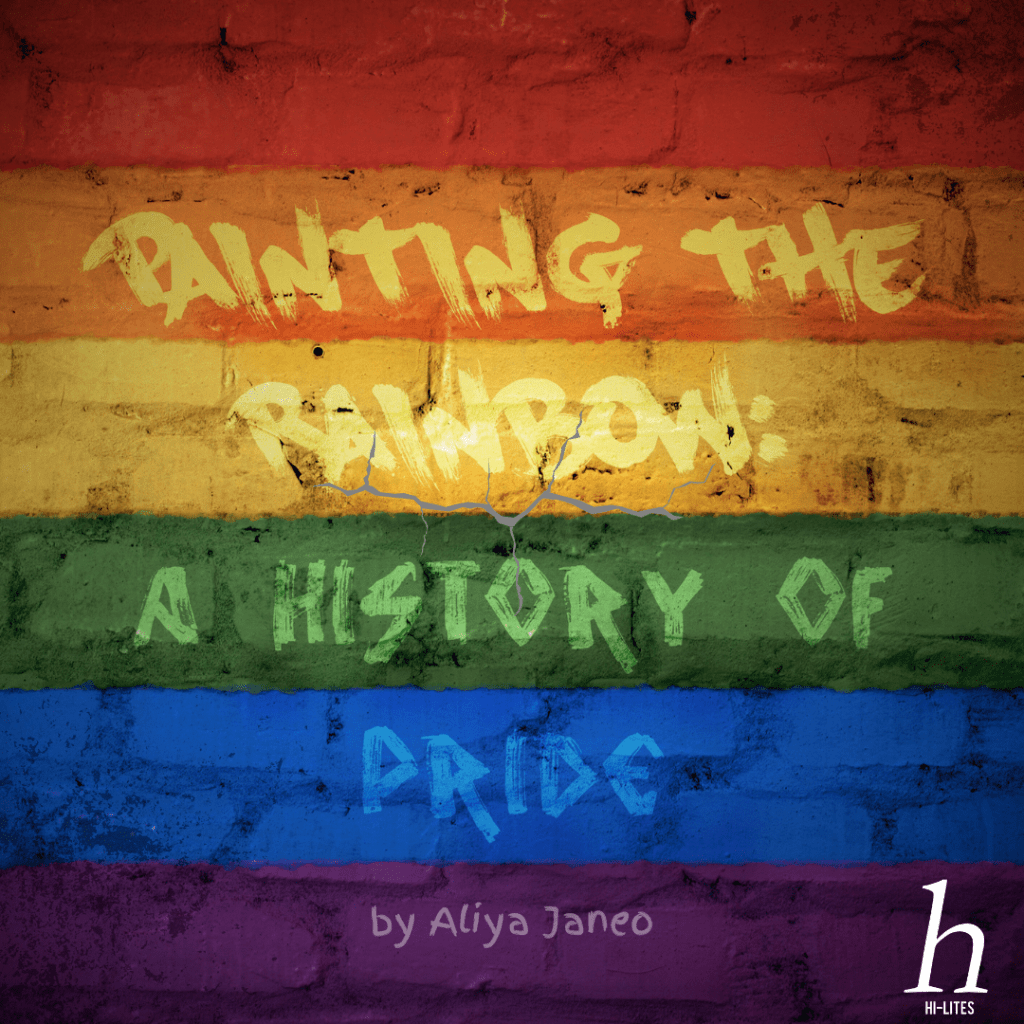
Some of the most prominent symbols of the LGBTQIA+ community are the different varieties of flags representing one’s sexuality, gender expression, and identity. The first flag was designed by activist Gilbert Baker in the late 1970’s and consisted of eight stripes and colors. However, the most well-known one is the new rainbow flag we wave today— what the community calls the progress flag.
Firstly, red is the color of life, just as dark red blood and passion runs through the veins of a person, providing one with life and energy. Originally, the first 8-striped pride flag had hot pink as its first color, symbolizing sexuality and the confidence that goes into embracing it.
Next, orange and yellow symbolize healing and sunshine respectively. Orange is seen as a fun and festive color that stimulates healing, and yellow is meant to embody new ideas— progress, if you will. Moreover, nature is also a healing place; and that’s what green symbolizes. Green is meant to show the prosperity and growth of nature that shines through the community today.
Furthermore, blue or indigo is the color of serenity, meant to symbolize the calm nature associated with the color. Additionally, it’s worth mentioning that in the original 8-striped flag both turquoise and indigo were present; wherein turquoise represented both art and magic and the transformative and imaginative nature of art.
Now, you may be used to the regal, prideful purple for spirit as the flag’s last color, but that is not the case this time around! Now in an arrow-shaped design on the left-hand side of the flag to represent the need for even more progress than what we have today— are the light blue, pink, white, black, and brown stripes. The light blue, pink, and white represent the Transgender members of the community, individuals whose gender identity differs to that of the one assigned to them at birth; and the black and brown represent the queer individuals of color that spearheaded the rise of pride.
The colors for each flag have their own individual meanings, but the progress flag is what encapsulates the community as a whole— it depicts the progress the community has made.
Today’s Colors
In the present, we’re more free to express ourselves than ever before; there has been more media depicting queer members of the community who destigmatize the idea of exposure to more LGBTQIA+ content. However, that doesn’t mean we’re completely free from the chains of discrimination. In America, the basic human rights the queer American community has fought for, are slowly being taken away— as seen in how Transgender minors are being denied gender-affirming care. Additionally, queer media and information has slowly but surely been once again stigmatized, especially amidst homophobic laws.
When we turn our eyes to our own setting in the Philippines, our country is no stranger to taking a more conservative stance based on the country’s majority religion. Although our country is considered to be open to the LGBTQIA+ community, that doesn’t limit the backlash the community still faces to this day. There have been a share of discrimination cases in the country, especially against members of the Transgender community.
To this day, initiatives like the SOGIE Bill (Sexual Orientation, Gender Identity, and Gender Expression Bill) haven’t been fully implemented and are still undergoing changes. There needs to be more protection for minorities like the LGBTQIA+ community— because why should a community built on the foundation of love, be treated with the complete opposite?
As the queer community waves their flags loudly and proudly, we remember the members of the community that pioneered a bright future for the next generation of queer individuals. Whether you wear your gender expression and sexuality on your sleeve, or have yet to show your colors— the LGBTQIA+ community will always welcome you with open arms.
Then again, even if you’re not a member of the community, love is for everyone and anyone; it is boundless, and nothing and no one should stop us from being unapologetically ourselves. We don’t choose who our hearts beat for. Although pride is incredibly celebrated in June, that shouldn’t stop anyone from choosing to love, every day of the year.
Life is a blank canvas, and the queer community continues to break boundaries set by stereotypes; and paint the world in technicolor.
 HiLites ASHS